The Weight of One Seat: What a Minor Party Can Do When the Powerful Won't Show Up
On October 29, 2022, 159 people died in Itaewon. Three years later, a public hearing finally begins — and the only witness refusing to appear is Yoon Suk-yeol, now serving life for insurrection. An analysis of his pattern of evasion and how a one-seat minor party keeps pointing to the empty chair.
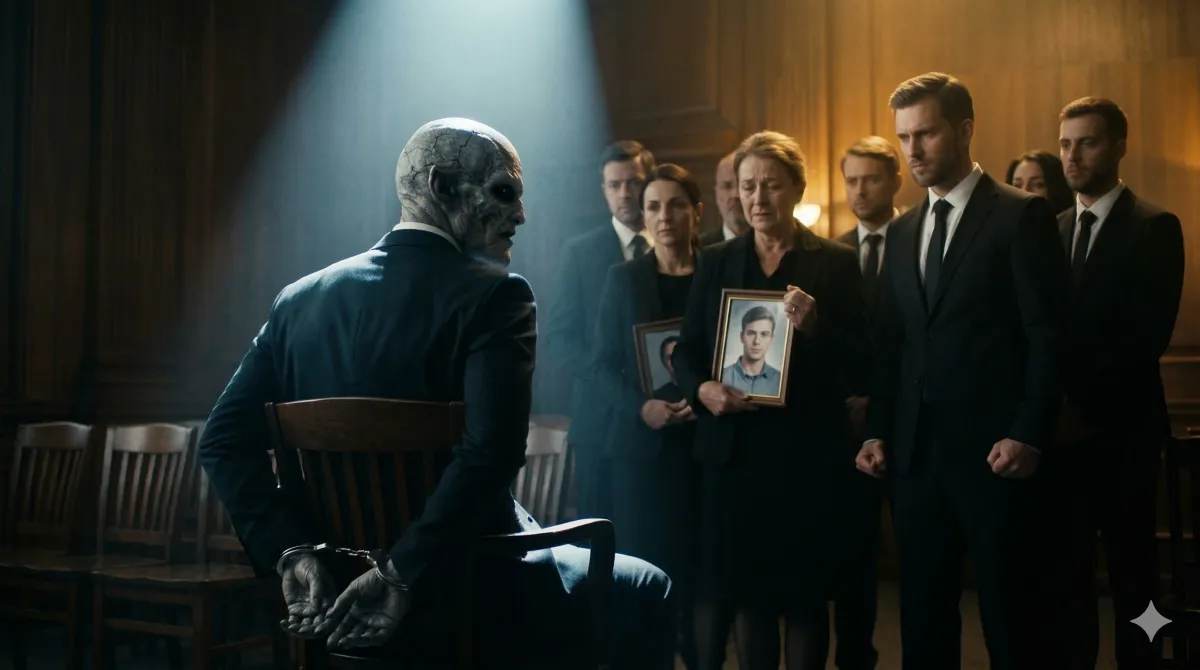
On the night of October 29, 2022, a crowd surge in Itaewon — a narrow-alleyed nightlife district in central Seoul — killed 159 people, most of them in their twenties and thirties, during Halloween festivities. It was one of the deadliest peacetime disasters in South Korean history. Investigations later revealed that police had received multiple emergency calls but failed to deploy adequate crowd-control measures. Officers had instead been disproportionately stationed near the presidential residence. President Yoon Suk-yeol's government resisted calls for accountability from the start: vetoing a special investigation act, undermining a parliamentary inquiry, and treating the disaster less as a national tragedy demanding answers than as a political liability to be managed. In December 2024, Yoon attempted to declare martial law in what prosecutors described as an insurrection. He was impeached, removed from office, and in February 2026, sentenced to life in prison. The Itaewon families are still waiting for the truth.
Now, three and a half years after the disaster, a public hearing is finally happening — and Yoon still won't show up.
Roughly fifty witnesses have been summoned. Starting tomorrow, the Special Investigation Commission on the October 29 Itaewon Disaster will hold two days of public hearings at Seoul's Banking Hall. Among those appearing: Lee Sang-min, the former Minister of the Interior, who was sentenced to seven years in prison for his role in the insurrection of December 2024. One person, and only one, has declared he will not attend. That person is Yoon Suk-yeol.
One hundred and fifty-nine people died. The commission created to determine the truth behind those deaths summoned him as a witness, and he refused. The Seoul Central District Court rescheduled Yoon's insurrection trial so it wouldn't conflict with the hearing dates. He is still hiding behind the excuse of "trial preparation."
This is not a simple absence.
What the Evasion of a Man Sentenced to Life Tells Us
Before this analysis goes any further, a disclosure. I am a member of the Basic Income Party. I support universal basic income, and I believe the full truth about the Itaewon disaster must be uncovered. I state this premise transparently. But standing on that premise, cold-eyed criticism grounded in fact and logic is not only possible — it is necessary.
Yoon Suk-yeol is currently a defendant sentenced to life imprisonment for insurrection. A court has already ruled that he attempted to destroy the constitutional order of the Republic of Korea. The Itaewon Disaster Truth-Finding Act provides penalties of up to three years in prison or a fine of 30 million won for unjustified non-attendance. It is self-evident that these penalties pose no additional threat to a man already sentenced to life. But this is precisely what makes his absence so damning. He won't show up because there is no legal downside? Then this absence is not a moral judgment. It is a legal calculation.
He is doing arithmetic in front of 159 deaths. That is the first truth his empty chair reveals.
Legal scholar Cass Sunstein and economist Timur Kuran jointly introduced the concept of the "availability cascade" in 1999. Originally designed to analyze distortions in risk perception, the mechanism itself is value-neutral. When a particular narrative gains repeated exposure in public discourse, its accessibility increases, which in turn influences more people's judgments — a self-reinforcing loop. The concept's relevance to the Itaewon truth-finding process is unmistakable. The Yoon government exercised its presidential veto against the Special Act on the Itaewon disaster. The ruling party worked to neutralize the parliamentary investigation. The voices of bereaved families were repeatedly at risk of being drowned out in political noise. What Kuran and Sunstein analyzed was the mechanism by which availability cascades upward. But the reverse also operates. When a narrative's exposure in public discourse is systematically blocked, its availability diminishes. Suppressing the availability of the truth-finding narrative — that is what the Yoon government spent three years doing. And now, his continued refusal to appear even after the court cleared his schedule signals that the strategy persists from inside his detention cell.
So the question must be asked: In the face of a truth-finding process for 159 deaths, how far should a defendant's "right to prepare for trial" be respected?
Here is my answer. The right to mount a legal defense is constitutionally protected. But in this case, the court altered its own trial schedule to open the door for his hearing attendance. The physical precondition for the "trial preparation" excuse was eliminated. If he still refuses to appear, this is not the exercise of a right. It is the abuse of one. More precisely, when forced to choose between the victims' right to truth and the defendant's right to convenience, Yoon chose unilaterally in favor of himself. He answered a hearing seat — one that 159 bereaved families spent over three years fighting to create — with an empty chair.
October 2022 to March 2026: A Chronicle of Evasion
On October 29, 2022, 159 people died in Itaewon, Seoul. From that day forward, the path to truth ran straight into a political wall. The Yoon government vetoed the Special Act. The parliamentary investigation was terminated after just 55 days. The ruling party refused to adopt the final report and walked out, opposing the subpoena of key witnesses including the Presidential Chief of Staff and the Prime Minister. These actions functioned as substantive obstruction of the truth-finding process. Bereaved families and civil society fought for years to breach those barriers.
A pattern emerges. At every critical juncture of the Itaewon truth-finding process, Yoon and his ruling party either evaded or obstructed. The presidential veto. The neutralization of the parliamentary investigation. And now, non-attendance at the hearing. This is not coincidental repetition. It is a consistent strategy. What a full investigation would reveal — why police failed to respond adequately despite receiving 112 emergency calls during the disaster, why police personnel were concentrated near the presidential residence, and what relationship this bore to the staffing vacuum at the Itaewon site — all of this could converge on Yoon's personal decision-making process.
A man sentenced to life for insurrection now evades a truth-finding process for 159 deaths. Place these two facts side by side, and the contours of one person's relationship to power and to human life become visible. The insurrection was the active seizure of power. Non-attendance is the passive evasion of responsibility. The forms differ, but the underlying structure is the same: a frontal refusal of institutional process — whether it is the National Assembly or a hearing commission. A terrifyingly consistent human being.
How One Seat Points to the Empty Chair
Today, Noh Seo-young, spokesperson for the Basic Income Party, issued a written briefing criticizing Yoon's non-attendance. Taken in isolation, this is an unremarkable press statement from the spokesperson of a minor party. But placed on the timeline of the Itaewon truth-finding struggle, it reveals the distinctive influence structure that a one-seat party wields over massive political agendas.
Representative Yong Hye-in served on the Special Parliamentary Investigation Committee for the Itaewon disaster in the 21st National Assembly. The Basic Income Party cannot form a negotiating bloc, so its participation in the committee was not legally guaranteed — it was a matter of customary accommodation for minor parties. In June 2023, Yong held a press conference directly pressuring the Democratic Party of Korea, declaring that the legislature "must fulfill its responsibility without vacillation" in the face of the presidential office's veto threats. Even after the Special Act was enacted and the investigation commission launched, the Basic Income Party continued to monitor and push for progress in the truth-finding process.
The structural mechanisms through which a one-seat party exercises real influence on an agenda of this magnitude can be decomposed into three.
The first is agenda anchoring. Major parties must process dozens of issues simultaneously, so their attention to any single issue fluctuates with the political weather. The Basic Income Party, by contrast, has maintained the Itaewon disaster as one of its core agenda items with unwavering consistency. A paradox operates here: fewer seats enable greater agenda concentration.
The second is moral asymmetry. When the Basic Income Party calls for Itaewon truth-finding, there is some indirect political benefit in terms of moral image-building — this cannot be denied. But compared to the direct political returns a major party expects from this issue — approval rating gains from government criticism, political capitalization in the event of a regime change — the benefit is asymmetrically small. The Itaewon disaster has no direct connection to the party's core policies (basic income, land dividends), nor is it an issue that wins additional seats in elections. It is precisely this asymmetry that lends the minor party's voice a disproportionately heavy moral weight.
The third is first opposition pressure. The Basic Income Party's statements function less to move the ruling party directly than to prevent the Democratic Party from retreating on truth-finding. The minor party operates from a position free of both ruling and opposition entanglements, serving as an external monitor demanding adherence to the principle of accountability.
Is this role sufficient?
It is not. Let's be honest. The probability that Yoon reads the Basic Income Party's written briefing and changes his attendance decision is zero. A one-seat party has clear limits to what it can accomplish, and those limits should not be romanticized. But the dimension in which a minor party's voice operates is not direct policy change — it is the maintenance and shaping of the discursive environment. Reframing Yoon's non-attendance not as a mere "absence" but as "an insult to the bereaved families." Repeatedly imprinting the moral imperative of truth-finding onto the public sphere. This is a kind of influence that cannot be measured in seat counts.
What the Empty Chair Reveals
When the hearing begins tomorrow, one chair will remain empty as fifty-odd witnesses take their seats.
That empty chair is not a personal choice. It is a product of the system. A structure in which a person who once sat at the apex of presidential power can insulate himself from accountability for a disaster. A structure in which one can veto the Special Act, mobilize the ruling party to neutralize the parliamentary investigation, and still refuse to appear even after the court rearranged its schedule. This structure was not built by Yoon alone. It is the joint product of the institutional vacuum of accountability created by the office of the presidency, the self-protective mechanisms of prosecutorial power, and a party system in which the majority can prioritize political compromise over truth-finding.
Yoon is exploiting this structure to the very end. A country where a man sentenced to life for insurrection can answer a hearing about 159 deaths with an empty chair. These are the coordinates of the Republic of Korea in March 2026.
There is a one-seat minor party pointing to that empty seat. Its pointing will not move Yoon. But without that gesture, the empty chair remains just an empty chair. Someone must inscribe its meaning into the public record. The name of the defendant doing arithmetic in front of 159 deaths must be etched accurately into the history of truth-finding.
To judge a minor party's significance in a democracy solely by its seat count is to see only the quantitative dimension of democracy. When a minor party — relatively free from vested interests — consistently maintains an agenda that the majority may overlook or retreat from because it is politically inconvenient, that is a function serving the qualitative health of democracy. The search for truth about 159 deaths is an absolute imperative that no political calculation should be allowed to halt. A voice that refuses to abandon that imperative, regardless of its volume, is upholding the minimum condition of democracy.
Tomorrow, the empty chair in the hearing room. It is Yoon Suk-yeol's choice, and this system's self-portrait. We must not forget what that vacancy says.
Sources
- Basic Income Party, Spokesperson Noh Seo-young Written Briefing (2026.03.11)
- Kyunghyang Shinmun: Yoon Is the Only Non-Attendee Among Itaewon Hearing Witnesses (2026.03.10)
- Kyunghyang Shinmun: Lee Sang-min to Attend Itaewon Hearing (2026.03.04)
- OhmyNews: Investigation Commission Requests Trial Postponement
- MBC: Yoon Sentenced to Life in Insurrection Trial (2026.02.19)
- Legal Times: Lee Sang-min Sentenced to 7 Years for Insurrection (2026.02.12)
- SBS: 55 Days of the Itaewon Parliamentary Investigation (2023.01.17)
- Basic Income Party: Rep. Yong Hye-in Press Conference on Itaewon Special Act (2023.06.27)
- MOLEG: October 29 Itaewon Disaster Special Act
- Chicago Unbound: Kuran & Sunstein, "Availability Cascades and Risk Regulation" (1999)
Translated from the Korean original published on raylogue.com | March 11, 2026